Guía de preguntas y respuestas del Analizador de Carbono y Azufre: Documento técnico
Parte 1: Fundamentos y principios de funcionamiento
P1: ¿Qué es un analizador de carbono y azufre? ¿Por qué es crítico para la industria metalúrgica moderna?
R: Un "Carbon Sulfur Analyzer es un instrumento analítico elemental de alta precisión dedicado a la determinación exacta de las concentraciones absolutas de Carbono (C) y Azufre (S) en matrices sólidas como acero, hierro, aleaciones, cerámicas y minerales.
En la ciencia de materiales, el carbono determina propiedades mecánicas como la dureza, la resistencia al desgaste y la resistencia a la tracción. El azufre, por otro lado, causa directamente la "fragilidad en caliente" (fisuración frágil durante el trabajo en caliente) y degrada la maquinabilidad del material. Controlar las concentraciones de estos dos elementos a nivel de ppm (partes por millón) es fundamental para garantizar la integridad estructural, cumplir con estrictas normas regulatorias y extender la vida útil de los componentes.
P2: ¿Cuál es el principio científico subyacente de un analizador de carbono y azufre por infrarrojos (IR) de alta frecuencia?
R: El instrumento funciona según el principio de combustión en horno de inducción de alta frecuencia seguido de espectroscopía de absorción infrarroja (IR).
Primero, se pesa una muestra sólida en un crisol cerámico junto con aceleradores metálicos puros (normalmente gránulos de tungsteno y escamas de cobre) y se coloca en un horno de inducción de alta frecuencia. Bajo un flujo continuo de oxígeno de alta pureza, el horno de inducción utiliza inducción electromagnética para calentar instantáneamente la muestra a más de 1,700℃. Esto desencadena una combustión completa, donde el carbono y el azufre unidos se oxidan completamente a dióxido de carbono (CO2) y dióxido de azufre (SO2).
Posteriormente, estos gases son arrastrados por el gas portador a través de un filtro de polvo en línea y tubos de eliminación/purificación de humedad hacia una celda de detección IR altamente sellada y controlada por temperatura. Debido a que las moléculas de CO2 y SO2 presentan bandas de absorción vibracional únicas y altamente específicas en distintas longitudes de onda infrarroja, la atenuación de la intensidad del haz IR se calcula matemáticamente mediante software de acuerdo con la Ley de Beer-Lambert, obteniendo la concentración absoluta precisa de cada elemento.
P3: ¿En qué se diferencia un determinador de combustión de carbono y azufre de otras técnicas de análisis elemental, como el Espectrómetro de Emisión Óptica (OES) y el analizador XRF portátil?
R: En la fabricación de metales y la metalurgia, estas tres tecnologías cumplen mandatos analíticos distintos:
Espectrómetro de Emisión Óptica (OES): Excelentes en el análisis cuantitativo multielemento simultáneo (detectando más de 20 elementos a la vez) para matrices estándar homogéneas. Sin embargo, al enfrentarse a aleaciones de carbono ultrabajo, fundiciones de alto carbono o muestras altamente segregadas/inhomogéneas, un analizador de carbono y azufre basado en combustión ofrece mayor precisión, límites de detección (LOD) más bajos y una repetibilidad inigualable.
Analizador XRF portátil: Son ideales para la clasificación rápida y no destructiva de aleaciones in situ y la identificación positiva de materiales (PMI). Sin embargo, debido a la física fundamental de la emisión de rayos X, la tecnología XRF portátil es físicamente incapaz de detectar carbono. Si se requiere análisis de carbono de grado de laboratorio en campo, debe utilizarse un analizador de metales móvil (analizador OES portátil). No obstante, un analizador de carbono y azufre de sobremesa por inducción de alta frecuencia sigue siendo el estándar absoluto de referencia para el control de calidad de carbono y azufre en laboratorio.
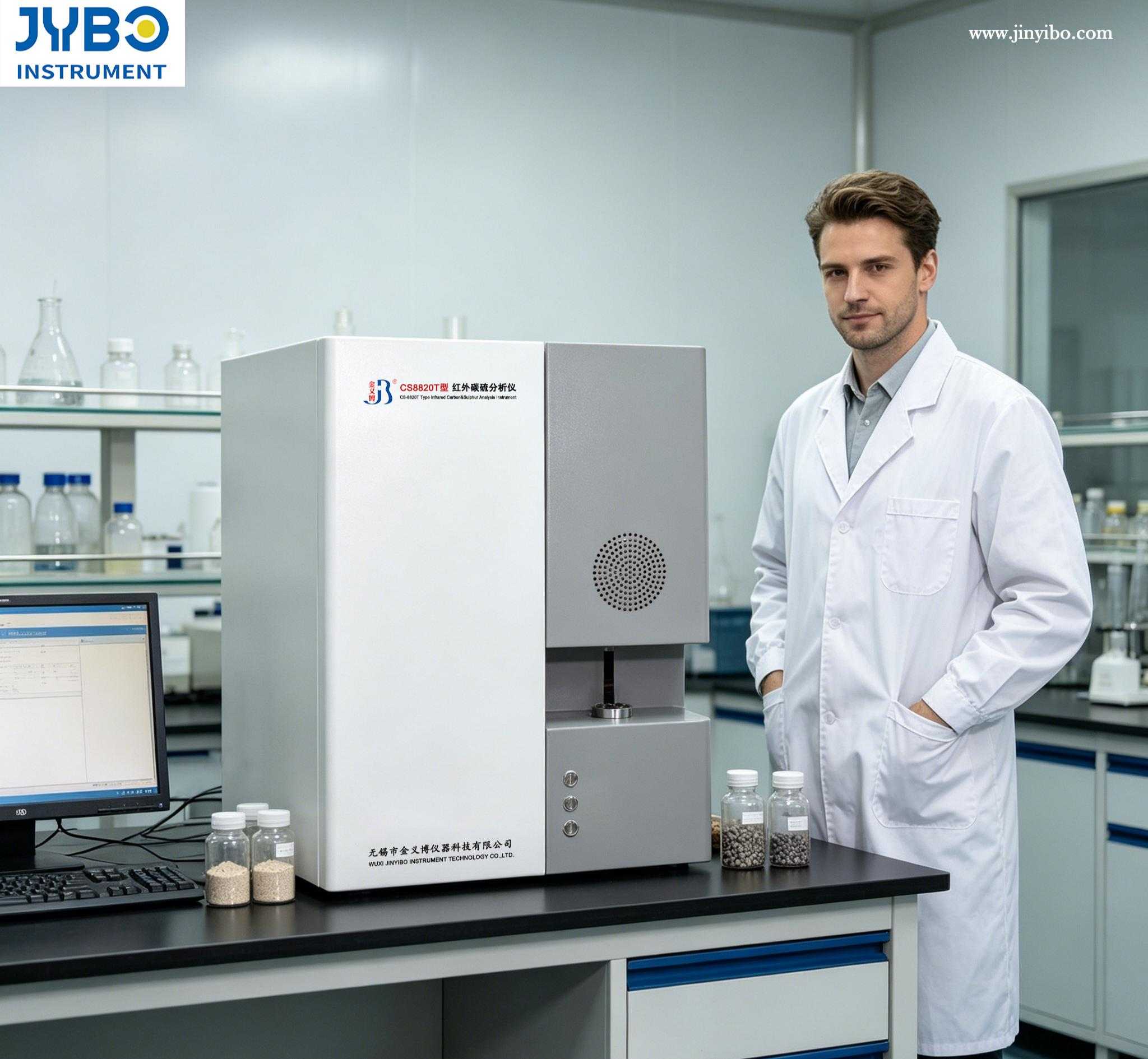
Parte 2: Aplicaciones industriales y selección de equipos
P4: ¿Cuáles son las principales aplicaciones industriales de los analizadores de carbono y azufre?
R: Esta tecnología se utiliza ampliamente en cuatro sectores industriales principales:
Metalurgia y producción de acero: Utilizado para el control del proceso de fusión en horno y la certificación de calidad del producto final de aceros al carbono, aceros inoxidables y aleaciones de carbono ultrabajo (libres de intersticiales / IF).
Fundiciones y fabricación de maquinaria: Utilizado para el control de calidad de entrada (IQC) de materias primas como arrabio, chatarra de acero y fundiciones (hierro gris y dúctil) para garantizar la microestructura requerida y evitar fracturas frágiles catastróficas en servicio.
Fabricación aeroespacial y automotriz: Utilizado para verificar el cumplimiento composicional de superaleaciones y componentes especializados de titanio/níquel, eliminando el riesgo de fallos por corrosión intergranular causados por picos no intencionados de carbono o azufre.
Minería, cemento y laboratorios geológicos: Utilizado para la determinación precisa del carbono total y el azufre total en minerales, piedra caliza, carbón y clínker de cemento para optimizar procesos de producción y auditar el cumplimiento ambiental.
P5: ¿Qué especificaciones técnicas principales debe evaluar un comprador al seleccionar un analizador de carbono y azufre?
R: Para garantizar el mejor retorno de inversión (ROI) y rendimiento del equipo, los compradores deben centrarse en las siguientes cuatro métricas clave:
Rango analítico (configuración del detector): Asegúrese de que el instrumento cuente con una configuración de celdas multirrango (como rutas IR dobles para carbono y azufre). Las celdas de bajo rango están dedicadas al análisis traza sub-ppm, mientras que las de alto rango evitan la saturación del detector al analizar materiales de matriz con alto porcentaje.
Potencia y estabilidad del horno de combustión: Un horno de inducción de alta frecuencia robusto es esencial (normalmente con una potencia de salida ≥2.5 kW; se recomienda ≥3.0 kW para muestras refractarias) para garantizar la fusión completa de metales refractarios (p. ej., tungsteno, molibdeno) y ferroaleaciones.
Automatización y capacidades de autolimpieza: Para entornos industriales de alta producción 24/7, se debe priorizar sistemas con limpieza automática del cabezal del horno y eliminación automática de escoria. Esto reduce drásticamente el tiempo de inactividad por mantenimiento manual y estabiliza la línea base.
Software e integración con LIMS: El software operativo debe contar con ajuste de curvas polinómicas multipunto, compensación dinámica de deriva y análisis de integración de picos en tiempo real. También debe ofrecer integración de datos fluida con balanzas electrónicas y Sistemas de Gestión de Información de Laboratorio (LIMS).
Parte 3: Precisión del sistema y calibración metrológica
P6: ¿Qué nivel de precisión pueden alcanzar los analizadores modernos de C/S en aplicaciones prácticas?
R: Bajo un flujo de trabajo analítico optimizado, estos instrumentos ofrecen precisión de clase mundial:
En niveles traza (≤0.001% C/S): La sensibilidad (LOD) puede llegar hasta 0.1 ppm (0.00001%), con una desviación estándar relativa (RSD) típicamente entre ≤1% y 2%.
En niveles de alta concentración (≥3.0% C/S): Para materiales como la fundición, los errores de repetibilidad se reducen significativamente, con un RSD típicamente ≤0.5%.
La precisión en el mundo real depende en gran medida de la fusión completa de la muestra, el control estricto de la temperatura de la celda IR (para eliminar la deriva por temperatura ambiente) y la purificación exhaustiva de impurezas de fondo en el gas portador de oxígeno.
P7: ¿Cuál es el flujo de calibración estándar para un Elemental Analyzer C S?
R: La calibración está diseñada fundamentalmente para establecer una función matemática fiable entre el área integrada de la señal del sensor IR y la masa absoluta del elemento, regida por la Ley de Beer-Lambert:
1. Detección de fugas y acondicionamiento (equilibrio cinético): El software ejecuta automáticamente una comprobación dinámica de fugas de gas. Tras una verificación exitosa, se queman 2–3 muestras de desecho para purgar la tubería interna y llevar el horno de inducción al equilibrio térmico.
2. Calibración en blanco (puesta a cero del sistema): Un crisol cerámico vacío que contiene solo la dosis estándar de aceleradores (tungsteno/cobre) se quema de 3 a 5 veces. El software promedia automáticamente las señales de fondo de referencia y resta este "valor en blanco" de los análisis posteriores, eliminando la interferencia de fondo de los crisoles y reactivos.
3. Alineación lineal de material de referencia certificado (CRM): Se analizan CRMs con matriz coincidente para eliminar efectos de matriz en relación con el material de prueba objetivo.
Consejo profesional: Puede aprovechar un solo CRM para construir una curva de calibración multipunto simplemente variando el peso de la muestra (p. ej., pesando 0.2 g, 0.5 g, 0.8 g y 1.2 g respectivamente). Esto introduce masas absolutas crecientes proporcionalmente de carbono y azufre al detector, generando una curva de ajuste altamente precisa sin necesidad de comprar múltiples estándares distintos.
4. Verificación y validación: Se quema un estándar de control de calidad independiente. Si la lectura medida se encuentra dentro del rango de incertidumbre certificado indicado en el certificado del estándar, la calibración es exitosa y el equipo queda oficialmente habilitado para pruebas rutinarias de producción.
Parte 4: Resolución de problemas y puntos de dolor del usuario
P8: El polvo de combustión es el "archienemigo" de la ruta de flujo de gas. ¿Cómo pueden los usuarios mitigar la obstrucción por polvo?
R: El proceso de combustión por alta frecuencia genera inevitablemente una gran cantidad de polvo de óxido metálico ultrafino. Los usuarios deben priorizar instrumentos equipados con filtros de polvo en línea de alta eficiencia y sistemas mecánicos automáticos de cepillado que limpien la pared interna del horno después de cada prueba. El reemplazo periódico de elementos filtrantes, la eliminación de residuos del horno y el mantenimiento de una dinámica fluida del flujo de gas son los pilares fundamentales para prevenir la distorsión de los picos de integración y la deriva de la línea base.
P9: ¿Por qué los usuarios ocasionalmente experimentan resultados de prueba inestables o una baja sistemática en las lecturas de azufre?
A: Los resultados inestables suelen ser causados por una fusión incompleta de la muestra o por contaminación de la muestra (como grasa superficial residual o capas de óxido no eliminadas). Si las lecturas de azufre son sistemáticamente bajas, normalmente indica que el SO2está siendo absorbido o condensado antes de llegar al detector. Esto suele ser provocado por reactivos químicos internos (como Anhydrone / Perclorato de magnesio anhidro) que se saturan de humedad y se apelmazan, o debido a microfugas en la trayectoria del gas posterior a la combustión. La sustitución rutinaria de los reactivos químicos y las comprobaciones dinámicas de fugas periódicas son las soluciones más directas.
¡Por favor, contáctenos para más consultas o información detallada!
Tel:+86-183-5283 6805
Email:sales@jinyibo.com
Web:www.jinyibo.com