¿Por qué los analizadores portátiles de fluorescencia de rayos X solo pueden realizar detección cualitativa y semicuantitativa?
En escenarios de campo como la clasificación de aleaciones, el cribado de minerales, las pruebas ambientales RoHS y el reciclaje de chatarra metálica, analizadores portátiles de fluorescencia XRF se han convertido en dispositivos de prueba rápida indispensables. Muchos usuarios han notado un problema: aunque el dispositivo puede determinar rápidamente los tipos de elementos y los valores de contenido correspondientes de una muestra, en la industria aún se define generalmente como un dispositivo cualitativo o semicuantitativo, incapaz de proporcionar los informes de prueba cuantitativos precisos de un espectrómetro de emisión óptica.
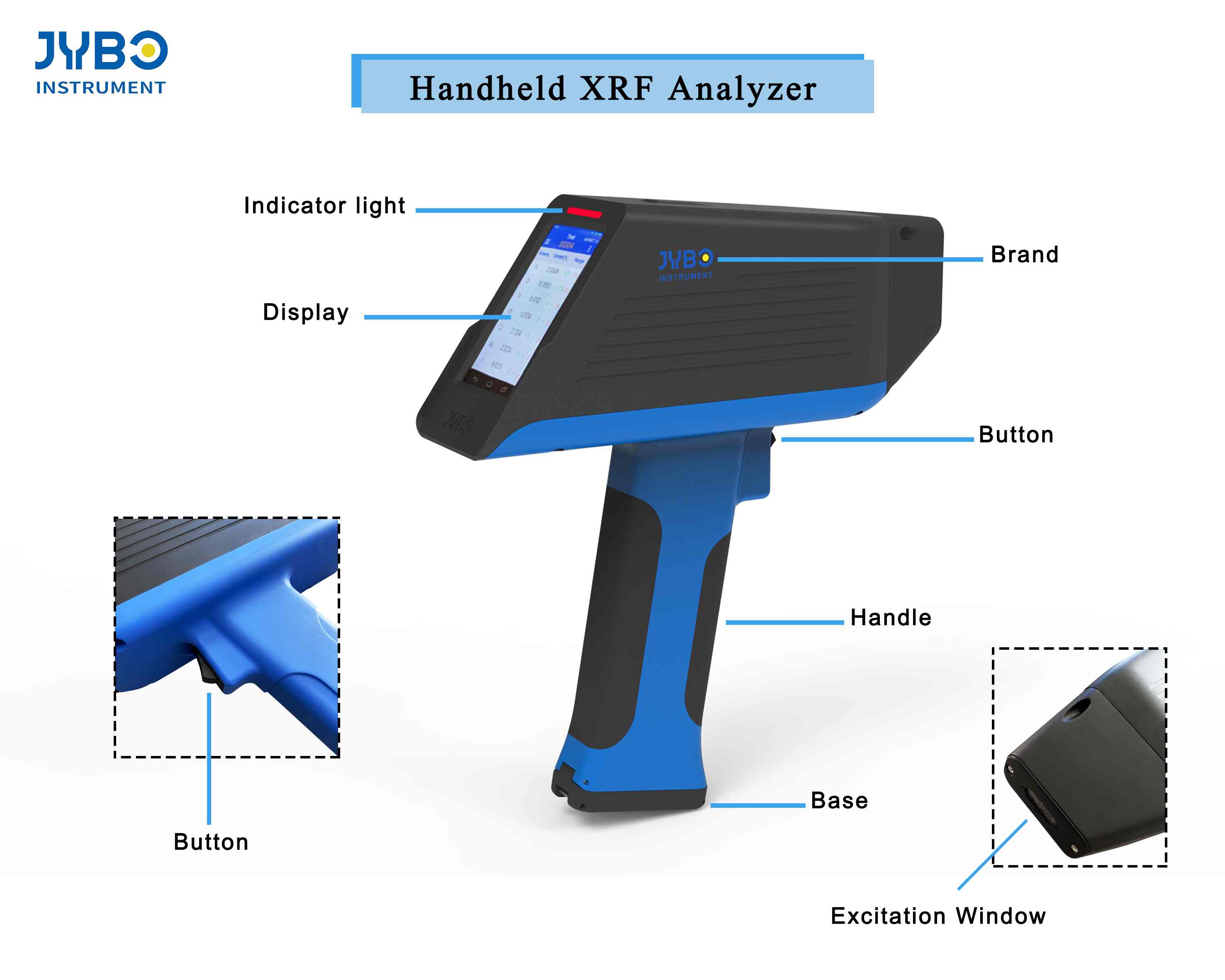
En primer lugar, aclarar dos conceptos clave ayudará a comprender el valor central y las limitaciones de XRF portátil:
Cualitativo: identificación precisa de todos los tipos de elementos en una muestra, como distinguir entre acero inoxidable, acero al carbono, y materiales de aleación, y la detección de elementos nocivos como plomo, mercurio y cadmio. Esta es la fortaleza de los XRF portátiles, con resultados estables y una precisión extremadamente alta.
Semicuantitativo: el dispositivo puede calcular el contenido aproximado de los elementos, con tendencias numéricas precisas y magnitudes fiables, satisfaciendo las necesidades de clasificación y selección en sitio. Sin embargo, tiene errores inherentes y no puede utilizarse como base para arbitraje, inspección de calidad o liquidación comercial.

La intención de diseño principal de espectrómetros XRF portátiles es la portabilidad, la velocidad y la realización de pruebas no destructivas en campo. Para reducir el tamaño, el consumo de energía y facilitar el uso manual, se han realizado numerosos compromisos de hardware, lo cual es la razón fundamental de su precisión insuficiente.
En comparación con espectrómetros XRF de sobremesa en laboratorios, los dispositivos portátiles tienen una menor potencia de la fuente de excitación y una menor intensidad de rayos X, lo que provoca mayores errores estadísticos en el conteo espectral y una estabilidad de datos inherentemente menor. Además, los pequeños detectores que incorporan tienen una resolución, disipación de calor y capacidad antiinterferencias significativamente inferiores a los de los equipos de sobremesa, lo que hace imposible captar con precisión señales espectrales débiles de los elementos.
Además, los dispositivos portátiles carecen de un entorno de prueba al vacío o lleno de helio. El aire absorbe fuertemente las señales de fluorescencia de los elementos ligeros, lo que provoca desviaciones significativas en la detección de elementos como magnesio, aluminio y silicio, limitando aún más la posibilidad de una cuantificación precisa.
Lograr una cuantificación precisa en la detección espectroscópica depende de una serie de muestras estándar con la misma matriz y contenido gradual para establecer una curva de trabajo específica que contrarreste diversas interferencias de detección. Sin embargo, esta lógica precisa es completamente inadecuada para los XRF portátiles.
Los materiales y tipos de muestras analizadas en campo son diversos y variados, incluyendo aleaciones, minerales y recubrimientos, lo que hace imposible personalizar curvas estándar para cada material individual. Por lo tanto, los dispositivos XRF portátiles se entregan por defecto con el algoritmo general del método de parámetros fundamentales (FP) en lugar de una curva de calibración con muestras estándar.
El algoritmo general solo puede proporcionar una compensación básica de los efectos de matriz y de la interferencia entre elementos; no puede eliminar completamente los errores de detección causados por la densidad de la muestra y la superposición de componentes. Solo puede estimar contenidos aproximados, lo cual es la razón principal del algoritmo semicuantitativo.
Los equipos de laboratorio de sobremesa funcionan bajo condiciones estandarizadas de temperatura constante, presión estable y muestreo fijo, con condiciones de operación altamente uniformes. Sin embargo, los escenarios de uso del espectrómetro XRF son completamente incontrolables, con numerosas variables.
La rugosidad de la superficie de la muestra, la capa de óxido, las manchas de aceite, los recubrimientos, la distancia de contacto, el ángulo y la presión durante la detección, así como los cambios de temperatura y humedad ambiental, afectan directamente a la intensidad de la señal de fluorescencia. Estos numerosos e impredecibles factores de interferencia amplifican continuamente los errores de detección, dando como resultado valores que solo pueden usarse como referencia y no pueden determinarse con precisión.

El Espectrómetro XRF portátil se define como un dispositivo cualitativo semicuantitativo, no por un defecto del equipo, sino por su escenario de aplicación. Sacrifica la precisión ultra alta a cambio de portabilidad, pruebas no destructivas y capacidades de detección extremadamente rápidas.
Es completamente capaz de clasificación de materiales en sitio, cribado rápido, y clasificación preliminar. Sin embargo, si se requieren datos precisos de composición y informes de prueba formales, la detección cuantitativa precisa aún debe realizarse utilizando un espectrómetro de sobremesa de laboratorio.
¡Póngase en contacto con nosotros para más consultas o información detallada!
Tel:+86-183-5283 6805
Email:sales@jinyibo.com
Web:www.jinyibo.com