Cómo los contenidos de carbono y azufre afectan las propiedades de los materiales
En la fabricación de materiales, muchos problemas de rendimiento no provienen de estructuras visibles, sino que se encuentran ocultos en elementos traza.Carbono (C) y azufre (S) son los ejemplos más típicos. Incluso en bajas concentraciones, ejercen un impacto directo en las propiedades de los materiales.
Desde el procesamiento de metales y el desarrollo de nuevos materiales hasta la fabricación de maquinaria, las industrias eléctrica y química, el control preciso del carbono y el azufre se ha convertido en una parte fundamental de la gestión de calidad empresarial.
Elementos críticos subestimados: Carbono y azufre
En la mayoría de los sistemas metálicos y de materiales: el carbono determina la resistencia y dureza de los materiales, al mismo tiempo que influye en la tenacidad y la maquinabilidad. Un exceso de carbono como impureza degradará la conductividad eléctrica.
El azufre normalmente afecta la plasticidad del material, la soldabilidad y la estabilidad a altas temperaturas.
Las fluctuaciones en los contenidos de carbono y azufre pueden provocar discrepancias evidentes en el rendimiento, ya sea en aceros, aleaciones o ciertos materiales funcionales. Por lo tanto, las pruebas estables y controlables de estos dos elementos son un requisito previo para una calidad de producto constante.
¿Cómo se realiza el análisis de carbono-azufre?
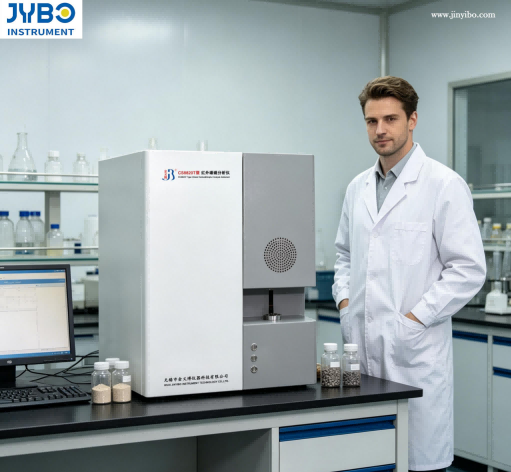
En la actualidad, el analizador de carbono y azufre por infrarrojo de alta frecuencia CS8820T se utiliza ampliamente en laboratorios y sitios de producción.
Su principio de funcionamiento principal: las muestras se queman a alta temperatura.El carbono y el azufre se convierten en CO₂ y SO₂ respectivamente, y se cuantifican mediante detección infrarroja.
Características del analizador de carbono y azufre por infrarrojo de alta frecuencia CS8820T
• Alta eficiencia de prueba, adecuado para el análisis rápido de muestras por lotes
• Excelente sensibilidad, capaz de analizar contenidos bajos de elementos
• Precisión estable con buena repetibilidad para el monitoreo de impurezas traza en materiales conductores
• Amplio ámbito de aplicación que abarca aceros, metales no ferrosos, minerales y algunos materiales no metálicos
El control preciso de los indicadores de carbono y azufre ayuda a las empresas a evitar desde el origen riesgos de calidad como el agrietamiento del material, la resistencia insuficiente y fallos de soldadura. El analizador CS8820T proporciona un soporte de datos fiable para la inspección de materias primas entrantes, el monitoreo del proceso de fundición y las pruebas de productos terminados, permitiendo un control de calidad de todo el proceso.
Preguntas frecuentes
P1: ¿Por qué la combustión por inducción de alta frecuencia combinada con la detección de absorción infrarroja puede lograr una sensibilidad extremadamente alta para el análisis de carbono y azufre en niveles ultrabajos?
R1: El calentamiento por inducción de alta frecuencia, complementado con aceleradores especializados, funde rápidamente y quema completamente la muestra en segundos, convirtiendo todo el carbono y azufre contenidos en CO₂ y SO₂ . El gas de combustión pasa por sistemas de pretratamiento de eliminación de polvo y secado antes de entrar en la celda de detección infrarroja. Debido a que CO₂ y SO₂ presentan picos únicos de absorción infrarroja, el detector infrarrojo mide la absorbancia de gases traza con alta sensibilidad y linealidad, logrando una cuantificación de alta precisión de carbono y azufre hasta el nivel de ppm.
P2: ¿Qué defectos físicos y mecánicos específicos suelen ser causados por un contenido excesivo de azufre en aceros y materiales de aleación?
R2: El azufre reacciona fácilmente con el hierro para formar sulfuro ferroso (FeS) de bajo punto de fusión, que se distribuye a lo largo de los límites de grano en un patrón de red. Durante los procesos de trabajo en caliente entre 800–1200℃, como la forja o el laminado, el FeS presente en los límites de grano se funde, provocando que el material se agriete bajo tensión, un fenómeno conocido como fragilidad en caliente (o fragilidad roja). Además, las inclusiones no metálicas de sulfuro alteran la continuidad de la matriz metálica, afectando significativamente la plasticidad del material, la tenacidad al impacto, la resistencia a la fatiga y la soldabilidad.
¡Póngase en contacto con nosotros para más consultas o información detallada!
Tel:+86-183-5283 6805
Correo electrónico:sales@jinyibo.com
Web:www.jinyibo.com