Requisitos clave para la preparación de muestras de aluminio y aleaciones de aluminio para análisis espectroscópico
El aluminio y sus aleaciones presentan propiedades materiales únicas, como un bajo punto de fusión, alta afinidad por el oxígeno, dureza relativamente baja y elementos de aleación volátiles, lo que hace que la preparación de muestras sea más exigente que la de los metales ferrosos. La preparación estandarizada de muestras es un requisito previo para un análisis composicional preciso medianteespectrometría de emisión óptica(OES). A continuación se detallan los requisitos técnicos básicos y las directrices operativas estandarizadas:
1. Prevención estricta del sobrecalentamiento
Con un punto de fusión de tan solo 660 °C, el aluminio es muy susceptible al sobrecalentamiento superficial durante su preparación. El calor excesivo provoca el engrosamiento de las capas de óxido, la volatilización de elementos de bajo punto de ebullición (como Mg, Zn y Li), la segregación por recristalización localizada y la formación de capas endurecidas por deformación, todo lo cual conlleva una desviación analítica significativa.
Aplique una presión suave y uniforme durante el pulido. Evite el pulido prolongado por una sola cara; deje que las muestras se enfríen naturalmente si la temperatura de la superficie aumenta notablemente. La decoloración de la superficie, la adhesión del material o los rastros de fusión localizada son inaceptables.
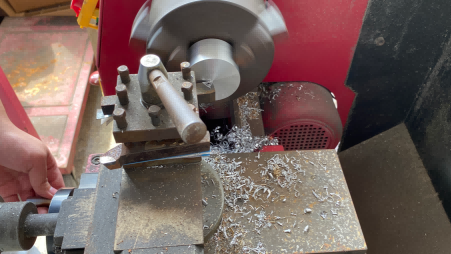
• Priorice las herramientas de corte afiladas para operaciones de torneado o fresado, con velocidad de husillo y avance controlados para minimizar el calor por fricción. No se recomiendan las muelas abrasivas convencionales debido a la alta generación de calor y las partículas abrasivas gruesas.
·Para las series 5xxx (Al-Mg), 7xxx (Al-Zn-Mg-Cu) y las aleaciones Al-Li con alto contenido de elementos volátiles, se prefiere el corte a baja velocidad al rectificado para minimizar la pérdida de elementos en la superficie.
2. Selección adecuada del abrasivo y del proceso.
La textura relativamente blanda del aluminio lo hace propenso a sufrir desgarros superficiales e incrustaciones abrasivas cuando se aplican granos gruesos.
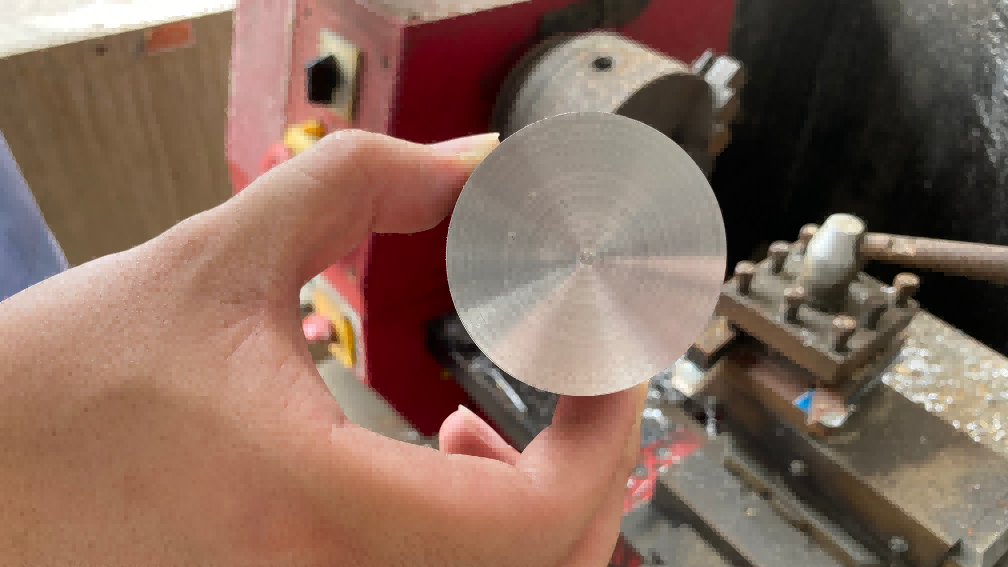
Se recomienda el uso de lijas o cintas abrasivas de carburo de silicio. Para el conformado general, es adecuado un grano de 120 a 240; para aleaciones blandas y aluminio de alta pureza, se puede utilizar un grano de 320 para el acabado. Deben evitarse los granos más gruesos que 80 para prevenir rayones profundos y el desgarro del metal.
El torneado y el fresado son ideales para el forjado.aleaciones de aluminioCon mayor dureza (series 2xxx y 7xxx), se consiguen superficies uniformes sin riesgo de incrustación abrasiva.
• El pulido excesivo es innecesario. Las superficies demasiado finas aceleran la oxidación y pueden formar una capa endurecida por deformación demasiado gruesa que perjudica la estabilidad de la excitación. Una superficie mate uniforme obtenida con abrasivo de grano 240 cumple con los requisitos de rutina.análisis espectroscópico.
3. Control de la oxidación y análisis inmediato
Debido a su alta afinidad por el oxígeno, el aluminio forma una película de óxido a nanoescala sobre superficies recién preparadas en cuestión de segundos al contacto con el aire. Una película de óxido más gruesa reduce la estabilidad de la excitación y disminuye la precisión de elementos ligeros como el Si, el Mg y el Cu.
• El análisis debe completarse en un plazo de 30 segundos después de la molienda, con un intervalo máximo permitido de 2 minutos.
Nunca toque la superficie analítica con las manos desnudas. El sudor, la grasa y las sales contaminarán la superficie y acelerarán la oxidación. Si se requiere limpieza, utilice únicamente etanol anhidro o acetona, y realice la excitación inmediatamente después del secado al aire.
• Las muestras que se hayan oscurecido o perdido su brillo metálico después del almacenamiento deben molerse nuevamente para eliminar toda la capa de óxido antes del análisis.
4. Tratamiento específico para tipos de muestras especiales
Chapas y perfiles de aluminio revestido
La capa de revestimiento superficial es de aluminio de alta pureza con una composición drásticamente diferente a la de la aleación base, y debe eliminarse por completo.
• Realizar un rectificado hasta alcanzar una profundidad superior al espesor del revestimiento de una sola cara (normalmente entre el 2 % y el 5 % del espesor total de la lámina). Realizar un rectificado transversal para verificar la uniformidad del color en toda la superficie de excitación, sin zonas residuales de aluminio puro.
aleaciones de aluminio fundido
Las estructuras fundidas suelen contener porosidad, burbujas, cavidades de contracción y segregación intergranular; las aleaciones con alto contenido de silicio también pueden presentar agregación primaria de silicio.
• Seleccione zonas densas y sin defectos para el mecanizado, evitando la porosidad, las inclusiones de escoria y otros defectos de fundición.
• Para muestras con una segregación de composición evidente, realice al menos 3 a 5 pruebas de excitación en diferentes posiciones y tome el valor promedio. Los resultados de un solo punto no son representativos.
Aleaciones de aluminio forjado (láminas, barras, perfiles)
• Elimine por completo las incrustaciones de óxido superficiales, las películas de pasivación, los recubrimientos y las manchas de aceite antes de preparar la superficie analítica.
• Se recomienda que la superficie de excitación sea perpendicular a la dirección de laminación/extrusión para reducir la influencia de la textura de deformación en los resultados.
5. Prevención de la contaminación cruzada
La superficie de aluminio fresco, altamente reactiva, se contamina fácilmente con metales extraños, y la capa de contaminación es difícil de eliminar por completo.
• Las bandas abrasivas, las herramientas de corte, los soportes y demás herramientas de preparación deben utilizarse exclusivamente para muestras de aluminio. No comparta herramientas con acero, aleaciones de cobre u otros metales para evitar la contaminación cruzada con Fe, Cu y otros elementos.
• Mantenga limpia la zona de preparación para evitar que el polvo metálico se deposite sobre las superficies de aluminio recién preparadas.
6. Requisitos de tamaño y uniformidad de la muestra
• La superficie analítica debe ser mayor que el punto de excitación del espectrómetro (generalmente ≥10 mm) para garantizar una excitación completa dentro del área de la muestra.
• La superficie debe ser plana y estar libre de deformaciones para asegurar un sellado hermético con el soporte de excitación y evitar fugas de argón.
• El espesor recomendado de la muestra es de ≥2 mm. Para muestras excesivamente delgadas, utilice un soporte de aluminio puro antes del análisis.
El cumplimiento de las especificaciones anteriores garantiza un rendimiento de excitación fiable y un análisis composicional preciso para muestras de aluminio y aleaciones de aluminio enespectrometría de emisión ópticapruebas.
Preguntas frecuentes
P: ¿Por qué los puntos de excitación suelen ser inestables o anómalos después de la preparación de muestras espectroscópicas para aleaciones de aluminio con alto contenido de silicio (como A380 y ADC12)?
A: Las aleaciones de aluminio con alto contenido de silicio, fundidas y en molde, contienen una gran cantidad de fases eutécticas de silicio (y silicio primario en grados hipereutécticos), lo que genera una enorme disparidad de dureza entre las fases blandas y duras. Si se preparan utilizando muelas abrasivas secas o papel de lija:
-
Extracción de fase de silicioLas partículas de silicio de alta dureza se extraen fácilmente mediante la aplicación de fuerza, dejando microporos en la superficie que provocan una descarga de chispa irregular durante la excitación.
-
Incrustaciones abrasivas y manchas en la matrizLa matriz de aluminio, relativamente blanda, se deforma fácilmente de forma plástica, extendiéndose y cubriendo las fases de silicio. Además, si se utilizan discos o lijas de carburo de silicio (SiC), las partículas abrasivas se incrustan fácilmente en la superficie. Esto no solo perjudica la estabilidad de la excitación, sino que también provoca mediciones de silicio (Si) falsamente elevadas.
Solución recomendadaPriorice las fresadoras espectroscópicas de alta velocidad y específicas para la preparación de muestras, a fin de garantizar secciones transversales limpias, planas e intactas de las fases de silicio. Evite defectos de fundición, como poros y cavidades de contracción, durante las pruebas, y realice de 3 a 5 pruebas de excitación en diferentes puntos de la superficie de la muestra para promediar los resultados y minimizar los errores de medición causados por la segregación microestructural.
¡Póngase en contacto con nosotros para cualquier consulta o información detallada!
Teléfono: +86-183-5283 6805
Correo electrónico: sales@jinyibo.com
Web: www.jinyibo.com